24 guides · Updated with the seasons
The Almanac
Guides to Reiki and energy healing, shadow work, chakras and crystals, moon rituals, astrology and Human Design. Each one answers the question first, then goes deeper.
Reiki & Energy

Reiki & Energy · 8 min read
Distance Reiki: How Remote Reiki Works and What a Session Is Like
Distance Reiki is Reiki given when the practitioner and the person receiving it are in different places, often connected by a video call. In the Reiki tradition, energy is guided by intention and is not limited by physical distance, and remote practice is taught as a standard part of Usui training. You rest at home while the practitioner works, and most people describe the experience as very similar to an in-person session.
Reiki & Energy · 8 min read
Does Reiki Work? An Honest Look at Benefits, Evidence and Side Effects
Scientific evidence for Reiki is limited and mixed, and no study has shown that it cures or treats disease. Many people do report feeling calmer, more rested and lighter after a session. The fairest way to decide is to try a few sessions alongside your usual care and notice what changes for you.

Reiki & Energy · 8 min read
How to Choose a Reiki Practitioner or Energy Healer
The right Reiki practitioner or energy healer explains clearly what they do, is honest that energy work complements medical care, prices sessions openly and never pressures you. Ask about their training, how a session runs and how they work alongside your doctor or therapist. Virtual sessions widen your choice well beyond who happens to be nearby.
Reiki & Energy · 8 min read
How to Prepare for Reiki: What to Expect at Your First Session
To get ready for Reiki, wear comfortable clothes, eat lightly, drink water and give yourself a quiet hour with nothing to rush off to afterward. For a virtual session, set up a private spot where you can lie down, with your device charged and notifications off. Arrive with one or two things you would like support with, and let the rest unfold.
Reiki & Energy · 8 min read
Pranic Healing vs Reiki: Key Differences and How to Choose
Reiki and Pranic Healing both work with life-force energy, but they use different methods. Reiki, from Japan, uses light touch or hands just above the body, and the practitioner acts as a channel while energy goes where it is needed. Pranic Healing, developed in the 1980s by Master Choa Kok Sui, uses no touch and follows a structured sequence: scan the energy field, cleanse congested energy, then energize.
Reiki & Energy · 9 min read
Reiki for Anxiety and Stress: What a Session Can Offer
Many people find a Reiki session helps them feel calmer, more rested and more settled in their body when anxiety is high. Reiki does not treat anxiety, and it works best as a complement to care from a doctor or therapist. If you are in crisis in the US, call or text 988, the Suicide & Crisis Lifeline.
Reiki & Energy · 9 min read
What Is Energy Healing? Types, Benefits and What a Session Involves
Energy healing is a group of practices based on the idea that a life-force energy flows through and around the body, and that working with it can support balance and wellbeing. Common types include Reiki, Pranic Healing, chakra balancing, aura cleansing, crystal healing and sound healing. It is complementary to medical care, and most people come for relaxation, calm and a sense of feeling like themselves again.
Reiki & Energy · 8 min read
What Is Reiki? How Reiki Healing Works and What It Feels Like
Reiki is a gentle Japanese energy practice in which a practitioner places their hands on or just above your body, or works at a distance, with the intention of supporting relaxation and balance. Most people feel calm, warm or sleepy during a session. It is a complementary practice that sits alongside medical care and never replaces it.
Inner Work
Inner Work · 10 min read
50 Shadow Work Prompts for Beginners, Grouped by Theme
Shadow work journal prompts are questions that help you notice the feelings, beliefs and traits you usually hide from yourself. Start with one prompt at a time, write for 15 to 20 minutes and ground yourself afterward. Below are 50 prompts in ten themes, plus exercises and safety tips for beginners.

Inner Work · 9 min read
Dark Night of the Soul: Meaning, Signs and How to Get Through It
The dark night of the soul is a period when the beliefs, comforts and sense of meaning you relied on stop working, and you feel lost before something new takes shape. The phrase comes from the 16th-century Spanish mystic St. John of the Cross. It can look like depression from the outside, so if low mood, hopelessness or thoughts of self-harm are part of it, please see a doctor or call or text 988 in the US.
Inner Work · 8 min read
Spiritual Awakening Signs: 15 Common Symptoms and What They Mean
A spiritual awakening is a shift in how you see yourself and the world, often bringing a stronger sense of meaning, intuition and connection along with some upheaval. Common signs include questioning old beliefs, needing more solitude, heightened sensitivity and changes in relationships. Physical symptoms such as heart palpitations, pain, dizziness or sleep problems should always be checked by a doctor first.
Inner Work · 9 min read
What Is Shadow Work? Carl Jung's Shadow Self, Explained
Shadow work is the practice of noticing and accepting the parts of yourself you learned to hide, deny or judge. The idea comes from the Swiss psychiatrist Carl Jung, who called these disowned parts the shadow. Done gently and at your own pace, it helps you understand your patterns, react less and feel more whole.
Chakras & Crystals
Chakras & Crystals · 8 min read
Aura Colors Meaning and How to Cleanse Your Aura
In energy healing traditions, the aura is a field of subtle energy said to surround the body, and its colors are read as reflections of mood, personality and energy. Red is often linked with vitality, blue with calm expression and violet with spirituality. You can cleanse your aura with breath, salt baths, sound, smoke, time in nature or an energy healing session.
Chakras & Crystals · 8 min read
Crystal Healing: Crystals for Protection, Anxiety and Everyday Use
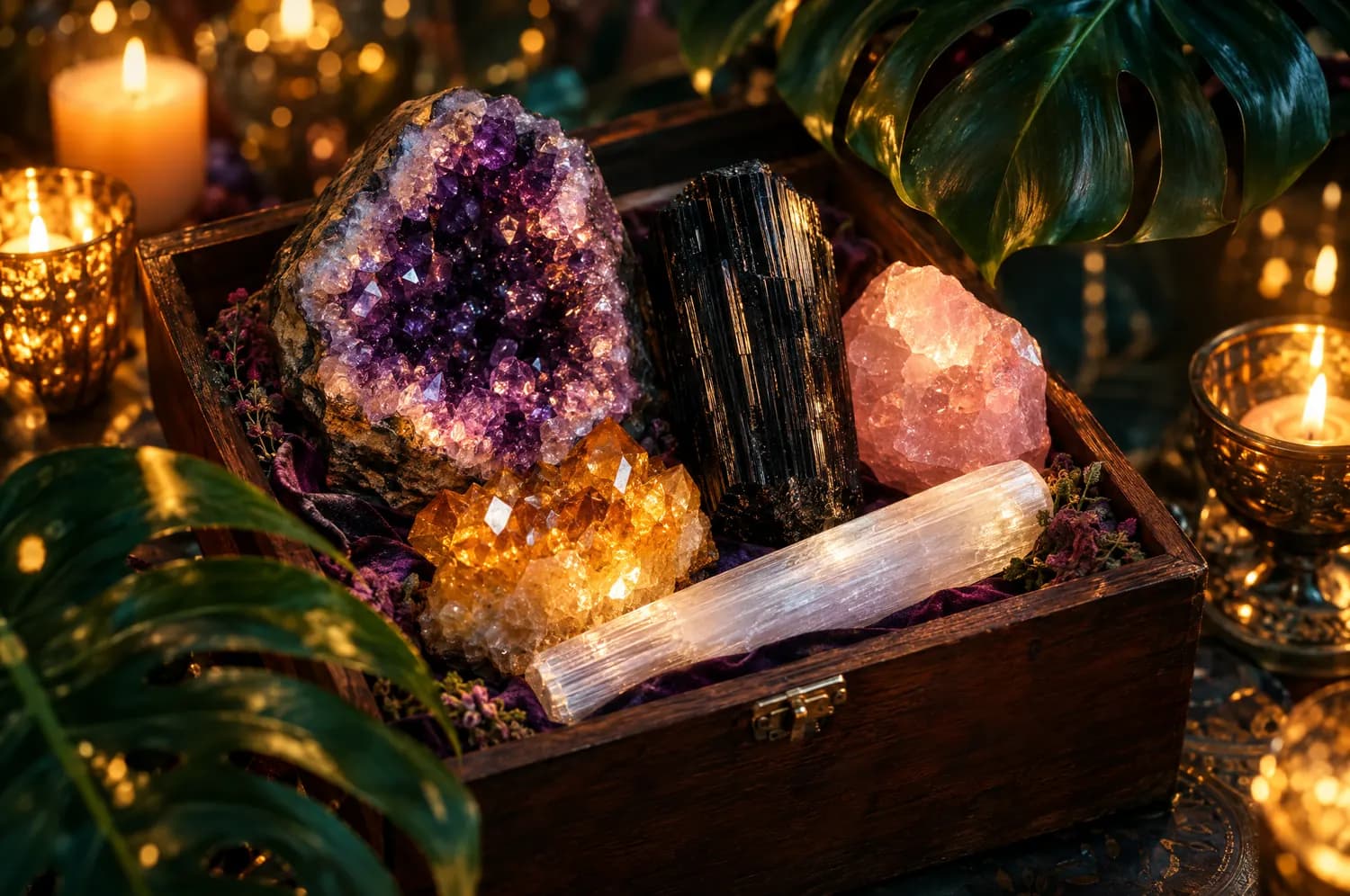
Crystal work is a complementary practice in which stones are held, worn or placed on the body to support calm, focus and intention. There is no good scientific evidence that crystals have healing properties of their own, and people mainly value the ritual, the sense of calm and the reminder of an intention. Popular choices include black tourmaline for protection and amethyst or rose quartz for calm.
Chakras & Crystals · 10 min read
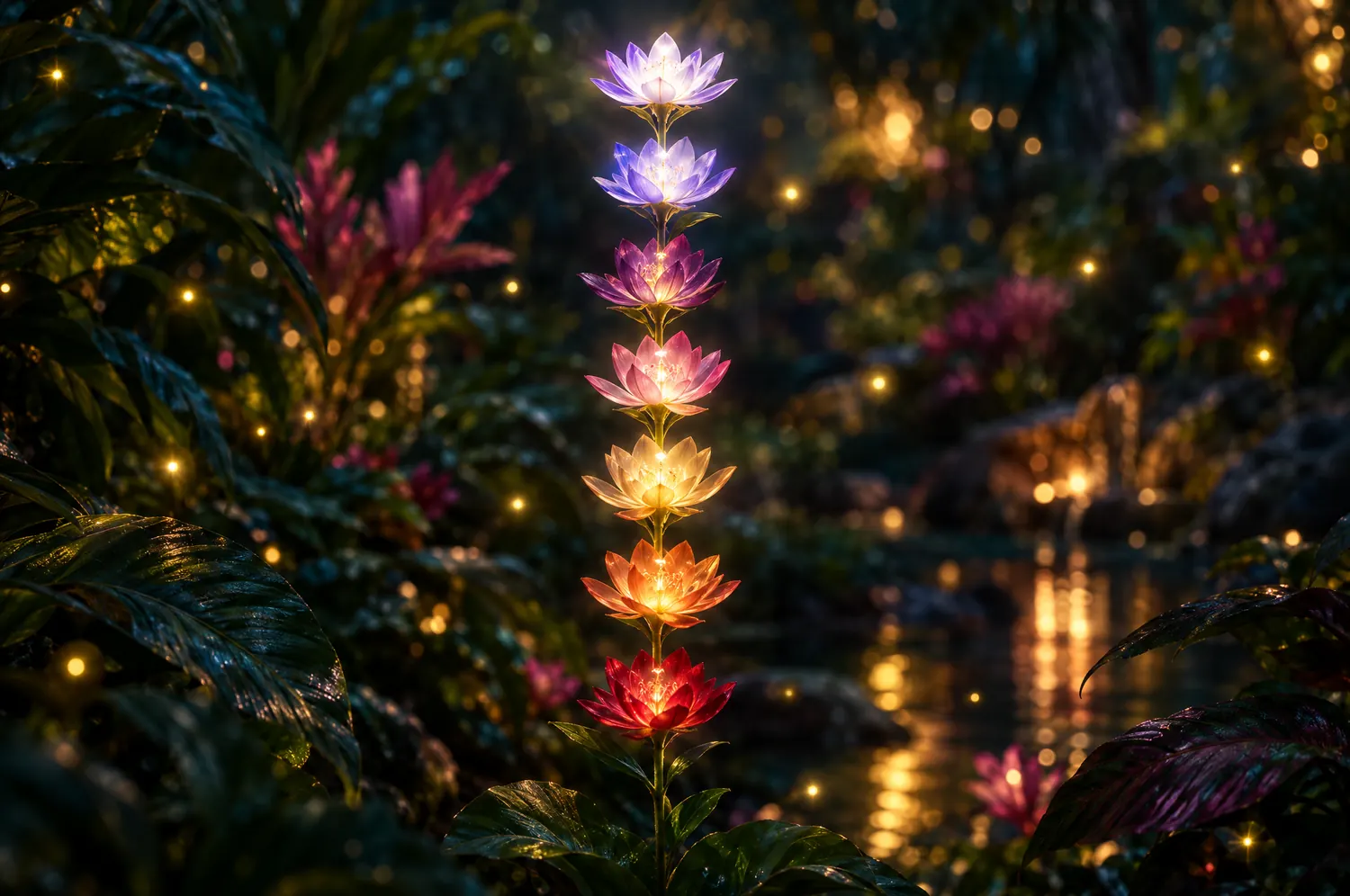
The 7 Chakras: Meanings, Signs of Imbalance and How to Balance Them
The chakras are energy centers described in yogic and tantric traditions, running from the base of the spine to the crown of the head. The modern seven-chakra system links each center to a color, a part of the body and a life theme, from safety at the root to spiritual connection at the crown. People work with them through breath, movement, sound, meditation and energy work to feel more balanced.
Moon & Ritual
Moon & Ritual · 7 min read
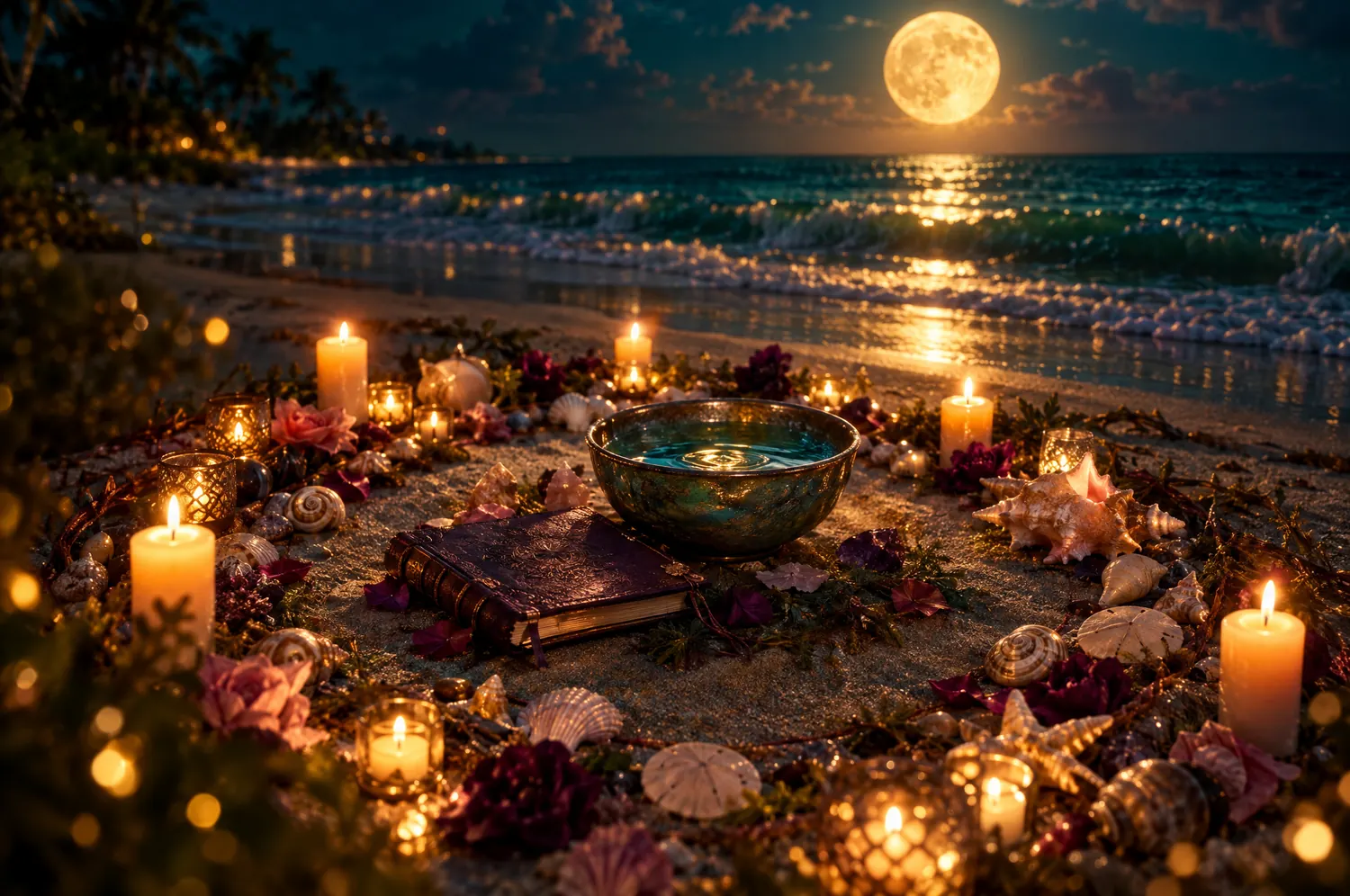
Full Moon Ritual: A Simple Release Ritual You Can Do at Home
A full moon ritual is a short, intentional practice done around the night of the full moon, usually focused on letting go of what you no longer want to carry. The simplest version takes about 20 minutes: settle your body, write down what you are ready to release, read it aloud, then safely tear it up or burn it and close with gratitude.
Moon & Ritual · 7 min read
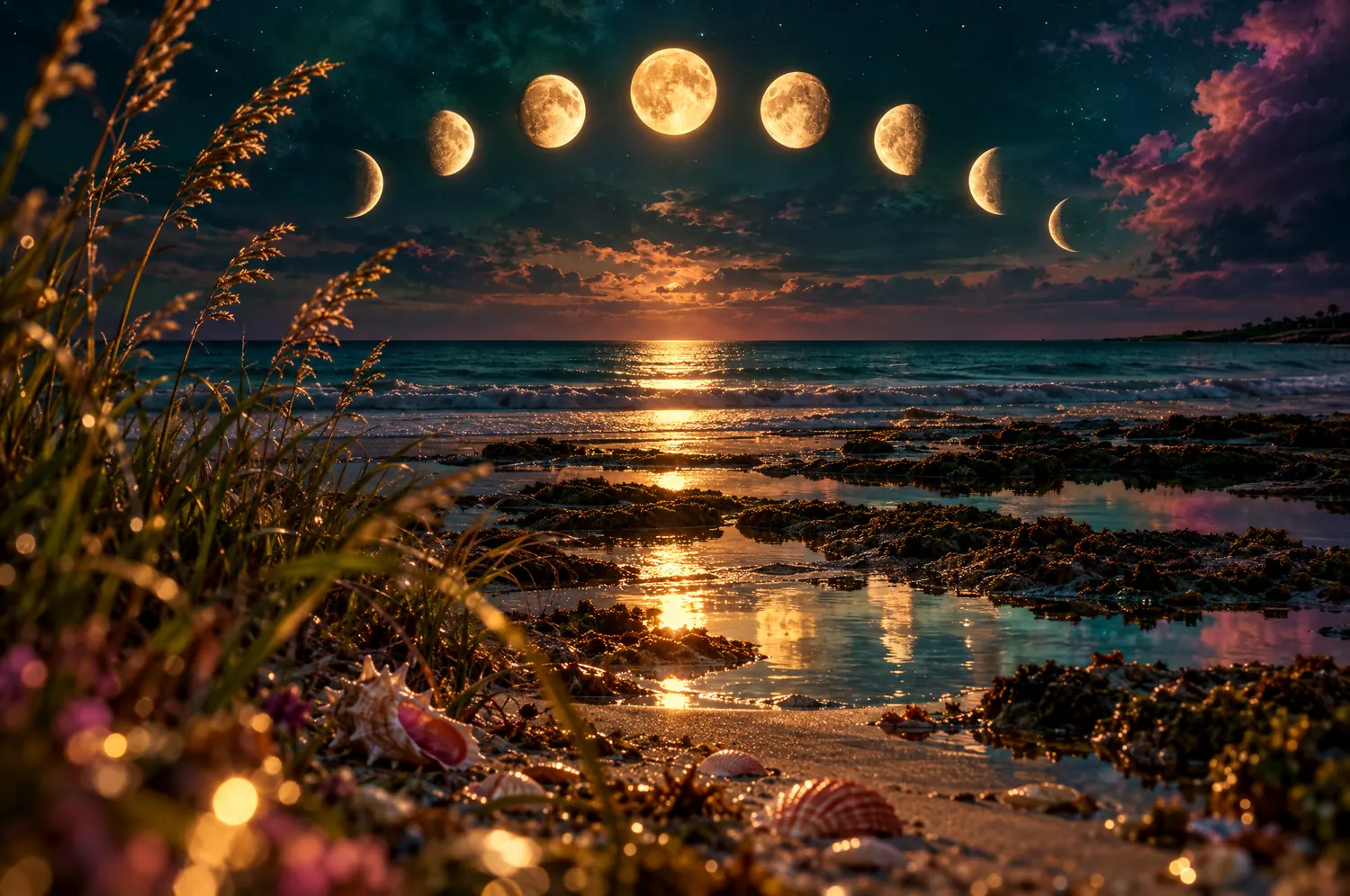
Moon Phases Spiritual Meaning: A Guide to All 8 Phases
The Moon moves through eight phases in about 29.5 days, from new moon to full moon and back. In spiritual practice, the waxing half (new moon to full moon) is linked with beginnings and growth, and the waning half (full moon back to new moon) with gratitude, release and rest. Each phase suggests a simple practice, such as setting intentions at the new moon or letting go at the full moon.
Moon & Ritual · 5 min read
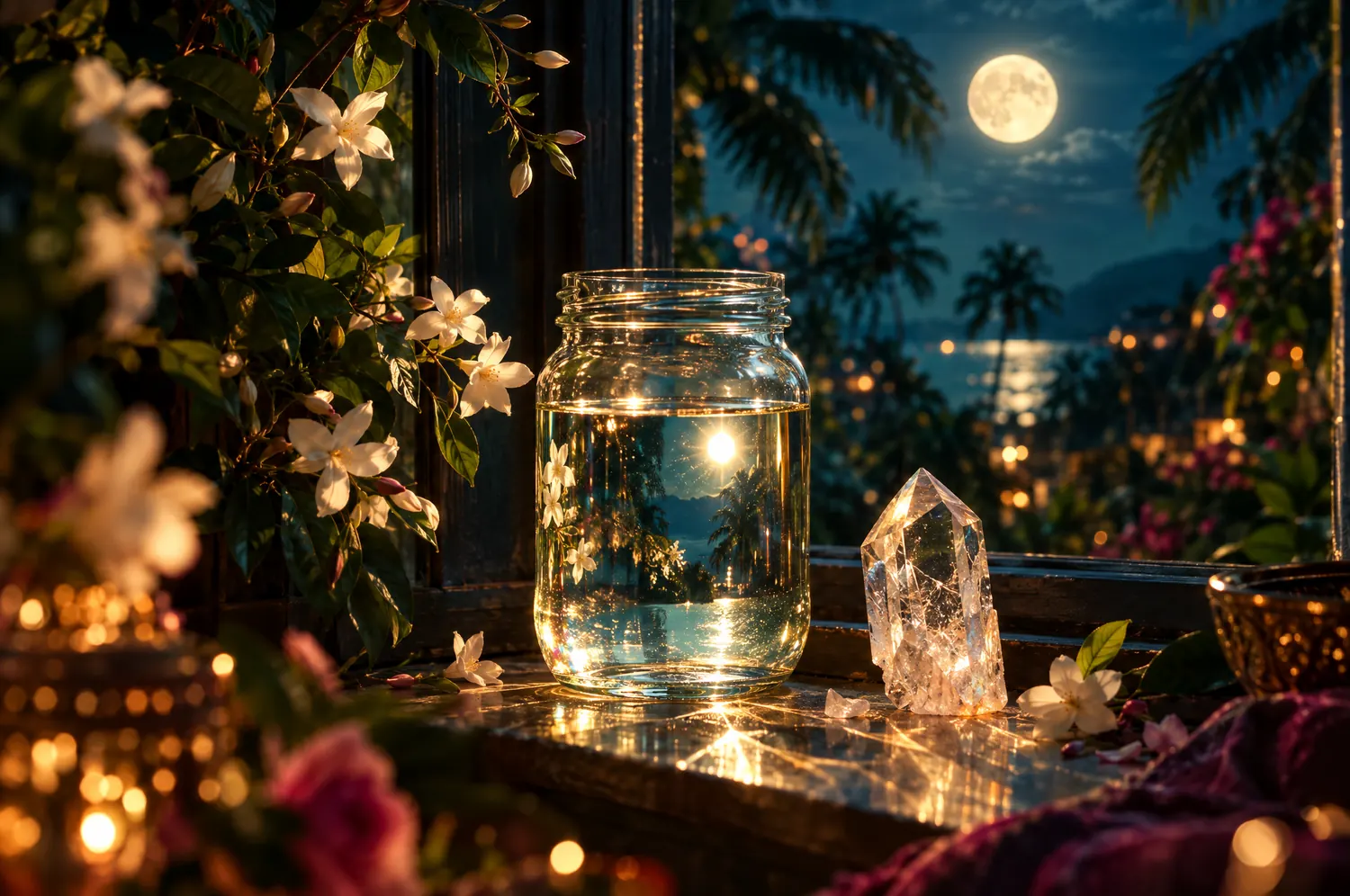
Moon Water: How to Make It and What to Do With It
Moon water is water that has been left out overnight under the Moon, usually a full moon, with an intention in mind. To make it, fill a clean glass jar, set your intention, leave it in moonlight overnight and bring it in by morning. Use it for rituals, plants, baths or cleansing your space, and only drink it if you started with clean drinking water in a clean, covered, food-safe container.
Moon & Ritual · 5 min read
New Moon Ritual: How to Set Intentions That Stick
A new moon ritual is a short practice done around the new moon to set clear intentions for the coming lunar cycle. The simplest version is to settle your breath, write one to three specific intentions in the present tense, name one small action for each, and check back on them at the full moon about two weeks later.
Moon & Ritual · 8 min read
The Five Elements: Earth, Water, Fire, Air and Ether in Healing
In yogic and Ayurvedic thought, everything is made of five great elements: earth, water, fire, air and ether (space). Each element carries its own qualities, so earth is stable, water flows, fire transforms, air moves and ether holds space. Elemental healing uses breath, movement, ritual and energy work to bring these qualities back into balance in body and mood.
Astrology
Astrology · 5 min read
Saturn Return: What It Is, When It Happens and What It Means
A Saturn return is the period when Saturn comes back to the same place in the zodiac it occupied when you were born. Saturn takes about 29.5 years to orbit the Sun, so the first return arrives around ages 27 to 30 and the second around 57 to 60. In astrology it's linked with growing up, taking responsibility and reassessing the structure of your life.
Astrology · 6 min read
What Is My Moon Sign? Meaning of All 12 Moon Signs
Your moon sign is the zodiac sign the Moon was in at the moment you were born. In astrology it describes your emotional needs: what makes you feel safe, how you react under stress and what comforts you. To find it you need your birth date, birth time and birthplace, because the Moon changes sign roughly every two and a half days.
Human Design
Human Design · 6 min read
The 5 Human Design Types Explained
Human Design has five types: Generator, Manifesting Generator, Projector, Manifestor and Reflector. Each type has a strategy for making choices with less resistance, a signature feeling that shows you're on track, and a not-self theme that signals you're off course. Your type comes from which centers in your chart are defined, so you need your birth date, time and place to find it.
Human Design · 6 min read
What Is Human Design? A Plain-English Guide
Human Design is a self-reflection system created by Ra Uru Hu in 1987 that combines ideas from astrology, the I Ching, the Kabbalah and the chakra system. Your chart, called a bodygraph, is calculated from your birth date, time and place. Its main parts are your type, strategy, authority, profile, nine centers, and the gates and channels that connect them.
Every session is held online · Monday to Friday, 9am to 5pm Eastern Time