In short
Moon water is water that has been left out overnight under the Moon, usually a full moon, with an intention in mind. To make it, fill a clean glass jar, set your intention, leave it in moonlight overnight and bring it in by morning. Use it for rituals, plants, baths or cleansing your space, and only drink it if you started with clean drinking water in a clean, covered, food-safe container.
Moon water is ordinary water you leave out overnight under the Moon, usually on a full moon, while holding a clear intention. People use it in rituals, baths, for watering plants and for cleansing their space. It is one of the simplest moon practices there is, and you can make it tonight with a glass jar and a windowsill.
This guide covers how to make it, which phase to choose, how to use crystals safely, what to do with it afterwards, and when it's safe to drink.
What moon water is
Moon water is a ritual object. The idea is that the water absorbs the qualities of the Moon phase and the intention you set, and carries them into whatever you use it for next.
There's no scientific evidence that moonlight changes water in a measurable way, and moon water isn't a health treatment. People make it because the ritual feels good and helps them stay connected to the lunar cycle. Every time you water a plant or add a splash to your bath, it reminds you of what you intended at the full moon.
How to make moon water, step by step
1. Choose your container
Use a clean glass jar or bottle with a lid. If you might drink the water, the container must be food-safe and washed in hot soapy water first. Avoid plastic if you can, and avoid any container that has held cleaning products.
2. Choose your water
- For drinking: use clean drinking water, such as filtered or bottled water.
- For plants, baths and cleansing: tap water, filtered water or collected rainwater all work.
3. Set your intention
Hold the jar in both hands and take a few slow breaths. Say or think what you want the water to hold. Examples: "This water holds calm." "I release what I've outgrown." "This water supports rest." Some people write the intention on a small label or piece of paper and tape it to the outside of the jar.
4. Place it in moonlight
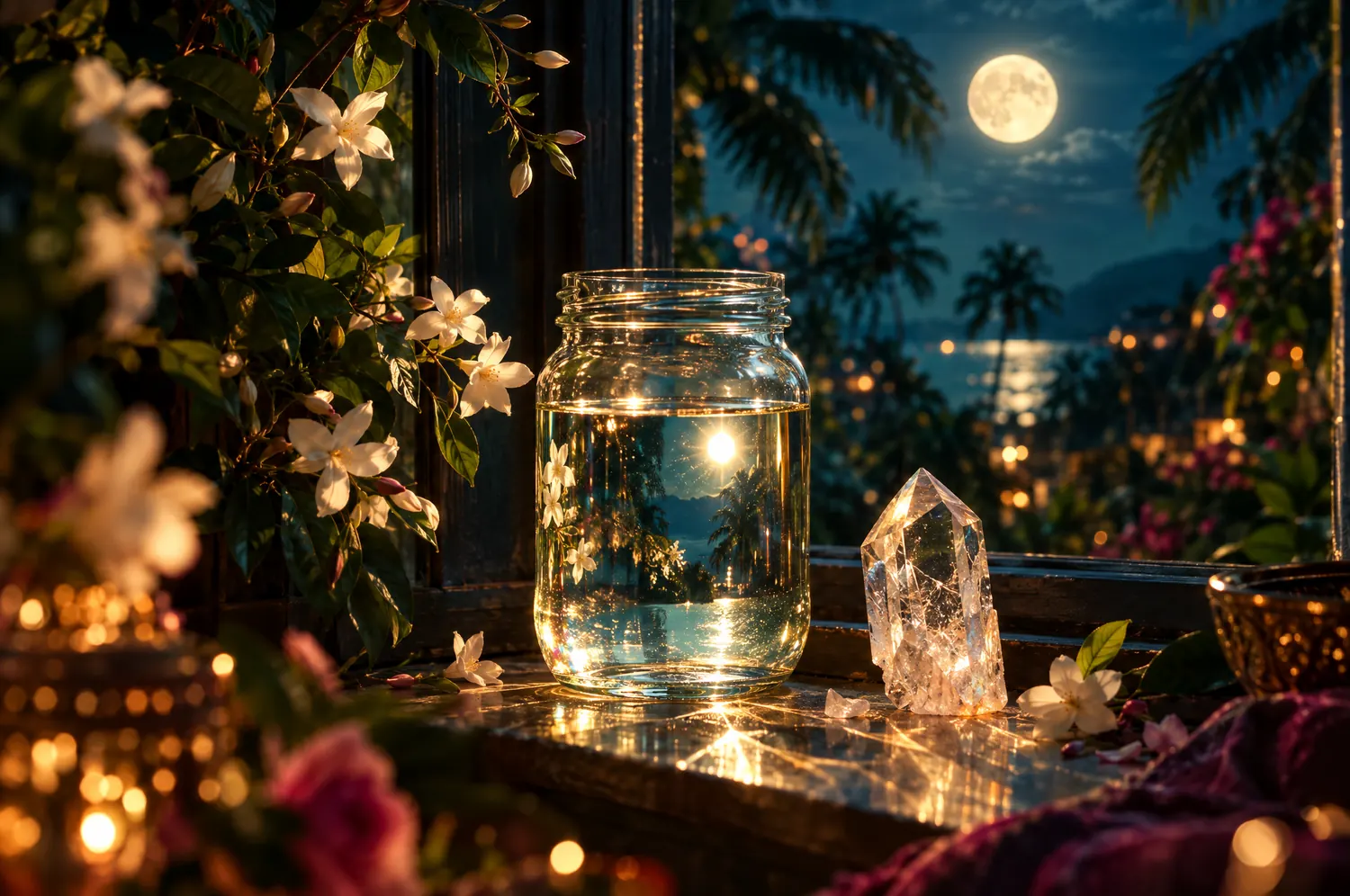
Put the jar outside, on a balcony or on a windowsill where the Moon's light will reach it. Put the lid on, especially if it's outdoors, to keep out insects, leaves and dust. The ritual still works with the lid on.
5. Leave it overnight
Leave the jar out for the night. Many people like to bring it in before direct morning sun hits it, as a way of keeping it "moon" water. It's a tradition rather than a rule.
6. Label and store it
Bring it in, write the date and moon phase on the label, and store it somewhere cool. Refrigerate any water you intend to drink.
Which moon phase to use
Most people make moon water on the full moon, when the Moon is brightest and traditionally at its fullest energy. Other phases carry different themes:
- Full moon: release, clarity, gratitude. The classic choice.
- New moon: fresh starts and intentions. The Moon isn't visible, so this water is more about the timing than the light.
- Waxing moon: growth and building toward something.
- Waning moon: letting go, rest and cleansing.
The moon calendar lists every full and new moon, with its zodiac sign and exact time in Eastern Time, so you can plan your next batch. Some people also like to match the water to the Moon's sign, for example a Taurus full moon for grounding or a Pisces full moon for intuition. You can read more about each phase in our guide to moon phases and their spiritual meaning.
A short moon water ritual
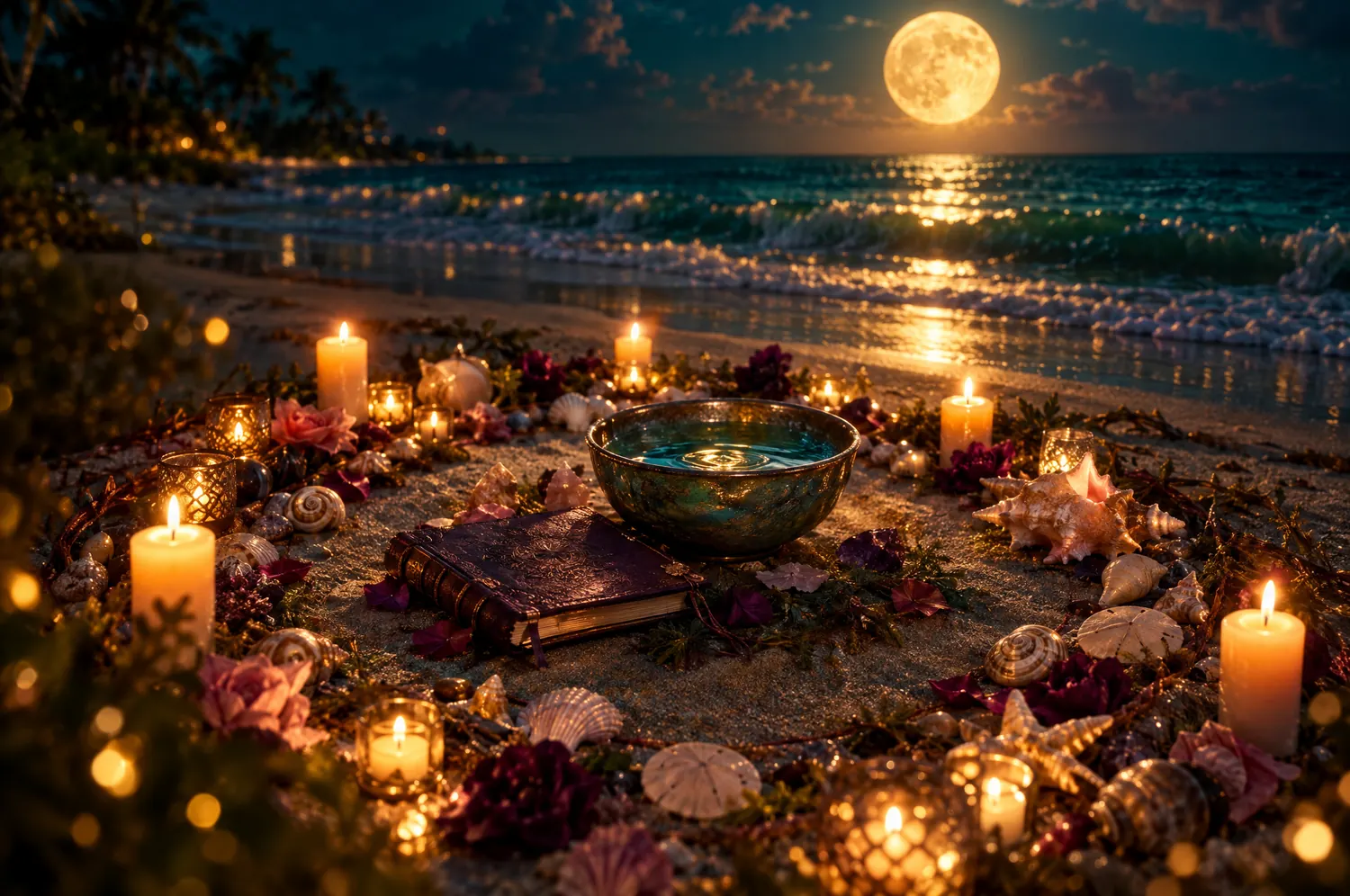
If you'd like to make the process more intentional, fold it into a full moon ritual:
- Light a candle and sit near your jar.
- Take five slow breaths.
- Write down what you're releasing and what you're grateful for this cycle.
- Hold the jar and say your intention aloud.
- Place it in the moonlight and leave it overnight.
- The next morning, before you use it for the first time, pause and repeat the intention once.
Our full moon release ritual walks through the release and gratitude steps in more detail.
Using crystals with moon water safely
Many people like to add a crystal. The safest way is to put the crystal next to the jar, touching the glass, rather than inside the water.
Some stones should never go in water you plan to drink. Malachite contains copper and can be toxic, so keep it well away from drinking water. Other stones can flake, dissolve or break down in water, and selenite, for example, slowly dissolves. If you're not completely sure a stone is safe in water, keep it outside the jar.
If you do want a crystal inside the jar, use the indirect method: place the crystal in a small, sealed glass container inside the larger jar so the stone never touches the water. Hard, stable stones such as tumbled clear quartz are the ones most often placed directly in water. Even so, the safest choice is to keep every stone out of water you plan to drink.
For more on choosing and caring for stones, see the crystal energy work that Chandini Botre offers.
What to do with moon water
There are lots of simple uses. Pick one or two that fit your routine.
- Water your plants and repeat your intention as you pour.
- Add it to a bath for a calm, reflective soak.
- Make a room spray by pouring some into a clean spray bottle and misting your space when it feels heavy. Use it within a few days.
- Rinse or cleanse crystals that are safe in water.
- Anoint your wrists or forehead with a few drops before meditation or journaling.
- Place a small bowl on your altar or bedside table.
- Make tea or drink it, but only if it meets the safety guidelines below.
- Use it in your new moon ritual to link the two halves of the cycle. See our new moon intention setting guide.
Is moon water safe to drink?
Only drink moon water if all of these are true:
- You started with clean drinking water.
- The container was clean, food-safe and covered with a lid the whole time.
- Nothing was placed in the water, including crystals.
- You refrigerate it and drink it within a day or two.
If the jar was left uncovered, sat outside where bugs or debris could get in, or had a stone in it, don't drink it. Use it on plants or for cleaning instead. Moon water is a ritual practice and doesn't have health benefits beyond those of ordinary drinking water.
Working with Chandini
If you enjoy working with the Moon, Chandini's Lunar Cycle Healing session (60 minutes, pay what feels right, virtual) is shaped around the current moon phase and can include simple rituals you can carry on at home. Start with a free 30-minute exploration call on the booking page.
This guide is for general information and reflection. It is not medical or psychological advice. If you are in crisis in the US, call or text 988.