Reiki & Energy · 9 min read
Reiki for Anxiety and Stress: What a Session Can Offer

By Chandini Botre
Updated
In short
Many people find a Reiki session helps them feel calmer, more rested and more settled in their body when anxiety is high. Reiki does not treat anxiety, and it works best as a complement to care from a doctor or therapist. If you are in crisis in the US, call or text 988, the Suicide & Crisis Lifeline.
Reiki can give you an hour to rest, breathe and feel your body settle when you are anxious. Many people with anxiety say they leave a session calmer, sleep better that night and feel less wound up for a while afterward. Reiki does not treat anxiety, and it works best alongside support from a doctor or therapist, never in place of it.
If you are in crisis or thinking about harming yourself, call or text 988 (the Suicide & Crisis Lifeline in the US) at any time. Reiki sessions do not replace a doctor, therapist or emergency care.
What Reiki can offer when you feel anxious
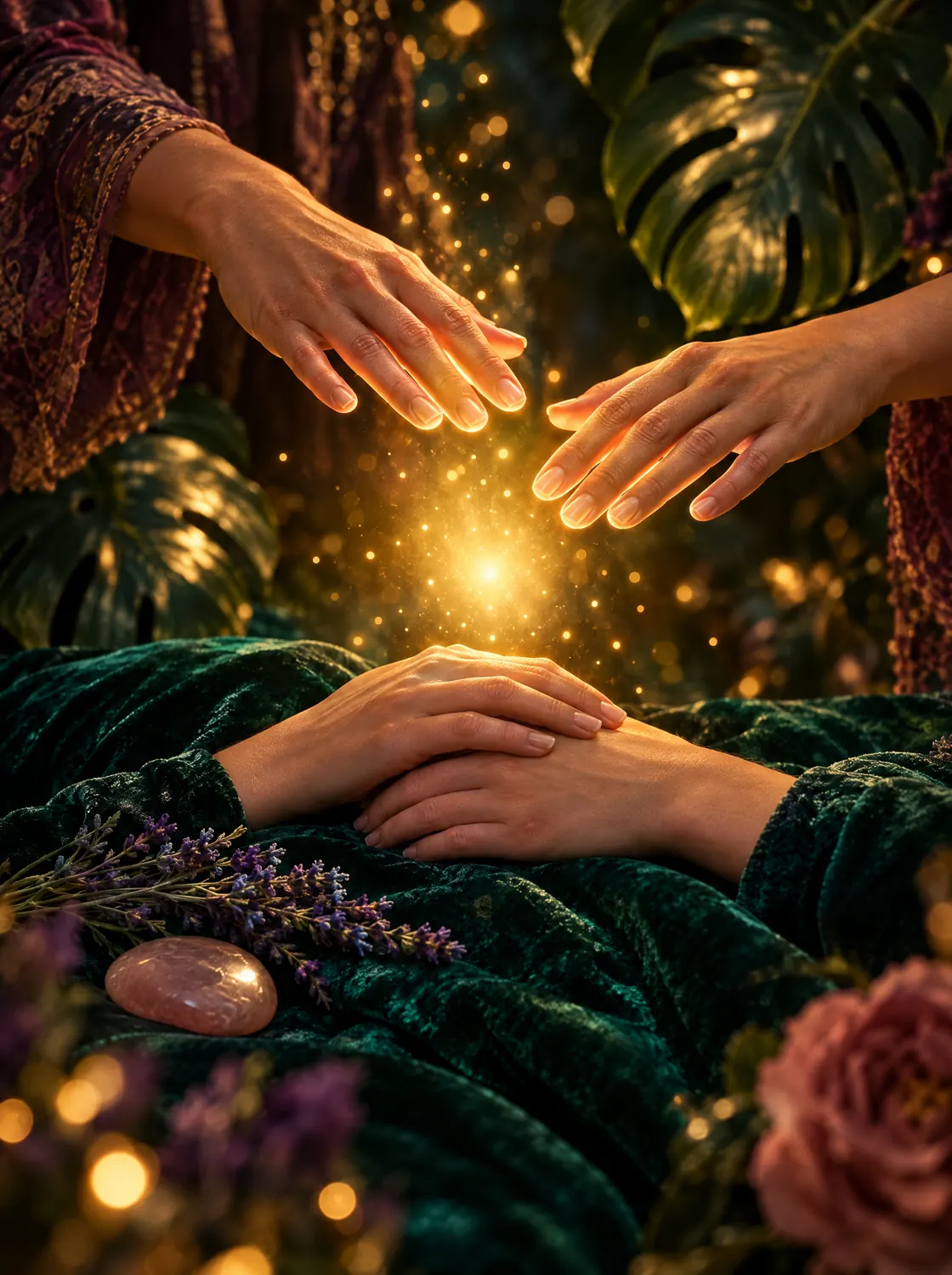
Anxiety often lives in the body as much as the mind: a tight chest, shallow breathing, clenched jaw, racing thoughts at 2am. Reiki works on that physical level. You lie down, someone attends to you calmly, and your body has the chance to slow down.
People who come to Reiki during anxious periods often describe:
- Breathing that slows and deepens without effort
- Muscles letting go, especially in the shoulders, jaw and belly
- A quieter mind, or at least some space between thoughts
- Drowsiness or falling asleep
- Tears or a sense of release
- Feeling more grounded and present afterward
These are reported experiences, and no one can promise them. Research on Reiki is limited and mixed, and it has not been shown to treat anxiety disorders. The guide does Reiki work? explains the evidence honestly.
What Reiki cannot do
Reiki cannot diagnose or treat an anxiety disorder, panic disorder, PTSD or depression. It is not a replacement for therapy, medication or a care plan. It will not remove the causes of stress in your life.
A trustworthy practitioner will say this plainly and will never suggest you stop medication or therapy. If someone promises to cure your anxiety, walk away.
Using Reiki alongside therapy or medical care
Many people find energy work fits well next to other support. Some ways to combine them:
- Tell your therapist or doctor you are trying Reiki. They may have useful thoughts on timing.
- Use Reiki as rest, not as a place to work through trauma in depth. Deeper processing is the work of a trained therapist.
- Notice patterns. If sessions leave you calmer, you might bring that insight into therapy.
- Keep your routines steady so you can see what Reiki adds.
Reiki for stress
Stress and anxiety overlap, but everyday stress is often about load: too much to do, too little rest. A Reiki session is one of the few hours in a week when nothing is asked of you. You do not need to talk, perform or produce anything.
People often book Reiki for stress during busy seasons at work, caregiving, a divorce or a move, after a loss, or when burnout is building. A regular rhythm, such as once a month or once every few weeks, gives some people a reliable pause to look forward to.
Reiki for sleep
Sleep and anxiety feed each other. When you are anxious it is hard to sleep, and when you are tired everything feels harder.
Many people doze off during Reiki, and many say they sleep well that night. Some people like to book a later session so they can go straight into a quiet evening. Reiki is not a treatment for insomnia. If you have ongoing sleep problems, talk to your doctor. As part of a wind-down routine, though, a session may help you remember what a relaxed body feels like.
If lying still makes you anxious
For some people, lying quietly with their eyes closed feels exposed rather than restful. That is common and nothing to be embarrassed about. You can adjust the session:
- Keep your eyes open, or rest them on a soft focus point
- Sit or recline instead of lying flat
- Ask for a no-touch session, or a virtual one so you are in your own space
- Keep a hand on your chest or belly to feel your breath
- Ask the practitioner to tell you what they are doing as they go
- Speak up or move at any time
A good practitioner will welcome these requests.
Energy healing for anxiety beyond Reiki
Reiki is one of several energy practices people turn to when they feel anxious. Others include:
- Pranic Healing. A no-touch method that follows a structured sequence of cleansing and energizing. See Pranic Healing vs Reiki.
- Chakra balancing. Work focused on the body's energy centers. Anxiety is often linked in this tradition to the root chakra (safety) and the solar plexus (sense of control).
- Aura cleansing. Clearing the energy field around the body, for when you feel heavy, drained or overloaded by other people's moods.
- Grounding work. Practices that draw on earth energy, such as time barefoot on grass or sand, slow breathing and visualizations of roots.
None of these treat anxiety. They are ways of resting and reconnecting with your body. For an overview, read what is energy healing.
Crystals for anxiety
Crystals are a popular companion to energy work. There is no scientific evidence that crystals change anxiety. Many people still find that holding a stone gives their hands something to do, their attention something to rest on, and a small ritual to return to.
Crystals traditionally associated with calm:
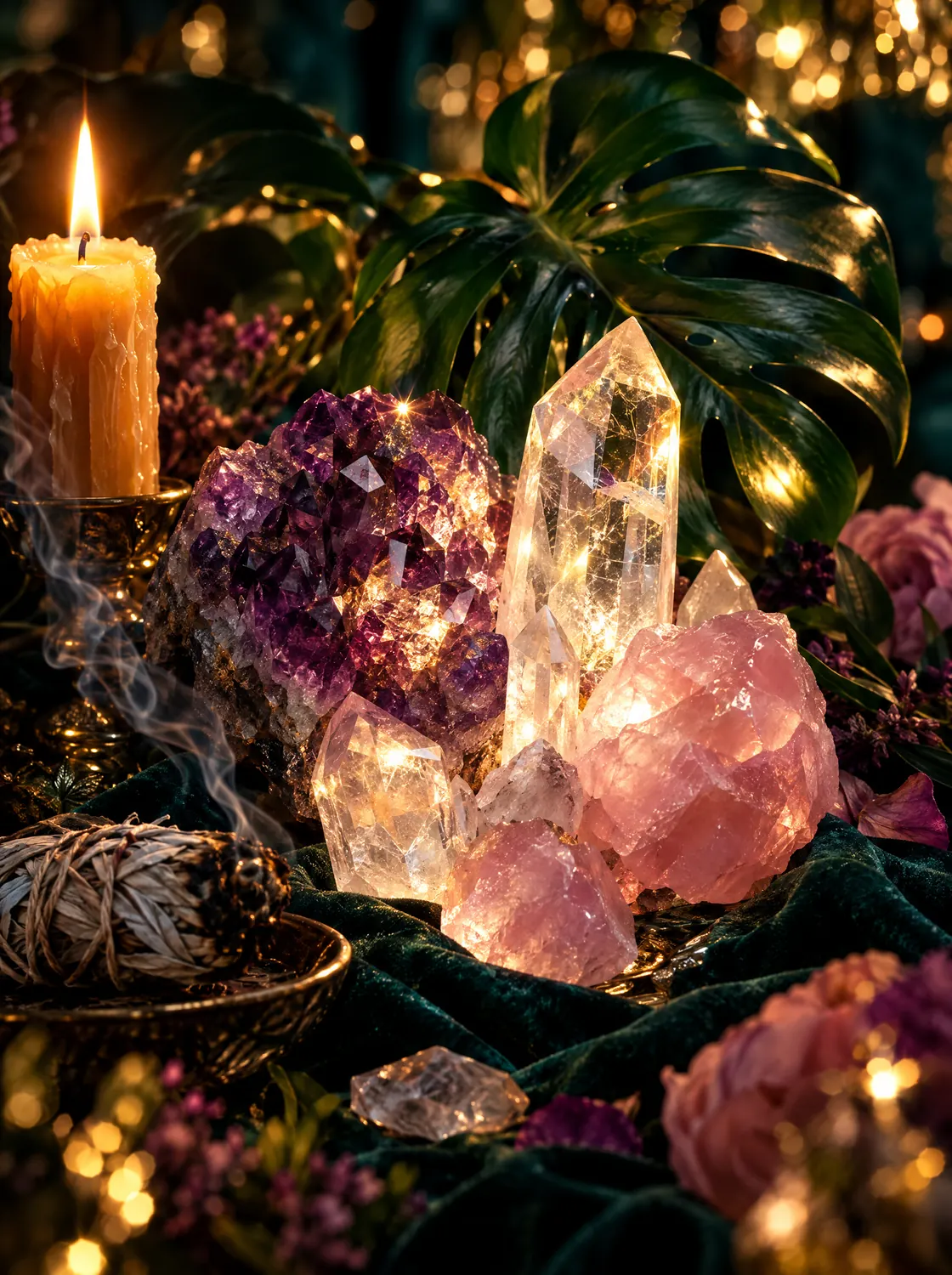
- Amethyst. Linked with calm and quieting a busy mind. Often kept by the bed.
- Lepidolite. Contains lithium, which leads some people to associate it with steadiness. It is not a supplement and should never be eaten or used in drinking water.
- Rose quartz. Linked with gentleness and self-compassion.
- Smoky quartz. Traditionally used for grounding and letting go of tension.
- Black tourmaline. Associated with protection and feeling steady.
A simple way to use one: hold the stone in your palm, breathe slowly in for four counts and out for six, and focus on its weight and temperature for a minute or two. The breathing is doing much of the work, and the stone helps you remember to do it.
Simple things to try at home
These are not Reiki, but they borrow from the same idea of calm, focused attention.
- Hands on heart and belly. Lie down, place one hand on your chest and one on your belly, and breathe slowly for five minutes.
- Longer out-breaths. Breathe in for four counts and out for six or eight.
- Name five things. Look around and name five things you can see, four you can hear and three you can feel.
- Step outside. A few minutes of fresh air, especially barefoot on grass or sand, can help you feel more grounded.
If these do little for you, or anxiety is getting in the way of daily life, please talk to a doctor or therapist.
When to get more help
Contact a doctor or mental-health professional if anxiety is affecting your sleep, work, relationships or appetite, if you are having panic attacks, or if you are using alcohol or other substances to cope. If you are in crisis, call or text 988 in the US.
Working with Chandini
Chandini Botre trained as a nurse and offers Reiki in calm, virtual sessions you can join from your own home. She works alongside the care you already have and never in place of it. You can read more on the Reiki healing page, see how sessions run in how to prepare for Reiki, or start with a free 30-minute consultation through book a session.
This guide is for general information and reflection. It is not medical or psychological advice. If you are in crisis in the US, call or text 988.