Reiki & Energy · 8 min read
What Is Reiki? How Reiki Healing Works and What It Feels Like

By Chandini Botre
Updated

In short
Reiki is a gentle Japanese energy practice in which a practitioner places their hands on or just above your body, or works at a distance, with the intention of supporting relaxation and balance. Most people feel calm, warm or sleepy during a session. It is a complementary practice that sits alongside medical care and never replaces it.
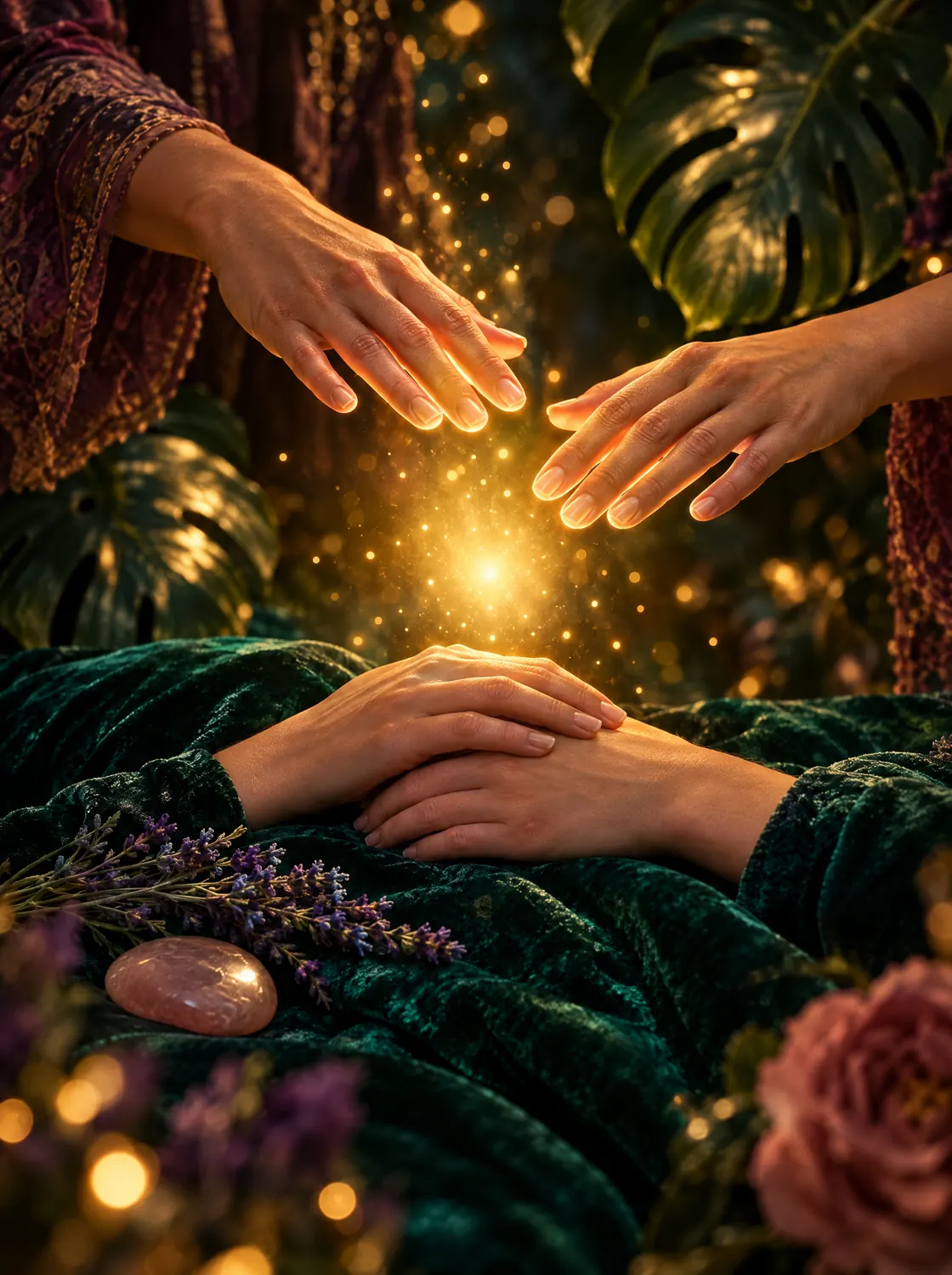
Reiki (pronounced RAY-key) is a Japanese energy practice. A practitioner places their hands lightly on your body, holds them just above it, or works from a distance, with the intention of helping you relax and come back into balance. You lie down fully clothed. Nothing is manipulated or massaged, and you do not need to do anything except rest.
This guide covers where Reiki comes from, how it is said to work, what actually happens in a session, what people feel, and what the evidence does and does not show.
Reiki in plain terms
Reiki is a way of receiving calm, focused attention through light touch or no touch at all. The word combines two Japanese ideas: rei, often translated as spiritual or universal, and ki, the life-force energy that Chinese traditions call qi and yogic traditions call prana.
In Reiki's own explanation, the practitioner acts as a channel for this life-force energy. They do not use their personal energy, and they do not decide where it should go. The energy is understood to move where it is needed.
You can think of a session as an hour of deep rest with someone paying quiet attention to you. For many people that alone is rare.
Where Reiki comes from: Usui Reiki
The form of Reiki most people learn today traces back to Mikao Usui, a Japanese teacher who developed the practice in the early 1920s. His system is known as Usui Reiki, or Usui Reiki Ryoho.
Reiki reached the United States through Hawayo Takata, a Japanese American woman from Hawaii who trained in Japan in the 1930s and later taught in Hawaii and on the mainland. Since then many branches have grown from the Usui root, some adding their own symbols or techniques.
Traditional Usui training is passed from teacher to student and usually comes in three levels:
- First level. The student learns hands-on Reiki for themselves and others.
- Second level. The student learns symbols and distance Reiki, meaning sessions for someone who is not in the room.
- Master or teacher level. The student learns to teach and pass Reiki on to others.
Each level begins with an "attunement," a short ceremony in which the teacher is understood to open the student to the flow of Reiki energy.
How Reiki healing is said to work
The traditional view is that stress, illness and emotional strain can leave your energy depleted or blocked, and that Reiki helps it flow freely again. When energy moves well, the body is thought to settle into a state where it can rest and repair on its own.
Science has not found a way to measure the life-force energy Reiki describes, and researchers have not confirmed a mechanism. What people consistently report is simpler to observe: they relax. Breathing slows, muscles let go, the mind quiets. Whatever you believe about energy, that shift into rest is something you can notice in your own body.
This is why Reiki is best understood as complementary. It can sit beside medical care, therapy and everyday self-care. It does not diagnose, treat or cure illness, and a good practitioner will never tell you to stop seeing your doctor.
What happens in a Reiki session
Sessions vary by practitioner, but most follow a similar shape.
- A short conversation. You talk about how you are feeling, what brought you in and anything you would like to focus on. Mention injuries, sensitive areas or anything that would make you uncomfortable.
- Settling in. You lie on your back, fully clothed, usually with a pillow and blanket. Shoes come off. Some people like soft music; others prefer silence.
- The Reiki itself. The practitioner moves through a series of hand positions, often starting at the head and working down to the feet, resting their hands lightly on you or holding them a few inches away. Each position is held for a few minutes. You can keep your eyes closed and simply rest.
- Closing. The practitioner lets you know the session is ending. You take a moment to come back, sit up slowly and drink some water.
- A brief check-in. You can share what you noticed, if anything. Some practitioners offer observations or simple suggestions for the days ahead.
In a virtual session, the steps are almost the same. You talk on a video call first, then lie down somewhere comfortable at home while the practitioner works remotely. The guide to distance Reiki explains this in more detail, and how to prepare for Reiki has a checklist for your first session.
What Reiki feels like
People describe a wide range of sensations. None of them is required, and feeling nothing in particular is common, especially the first time.
Things people often notice:
- Warmth, sometimes strong, in areas where the practitioner's hands are, or where they are focusing from a distance
- Tingling, gentle pulsing or a sense of movement
- Heaviness, as if sinking into the table or bed
- Drowsiness, or falling asleep for part of the session
- Emotions rising, such as tears, a sense of relief or memories surfacing
- Seeing colors behind closed eyes
- A clear, quiet feeling afterward, or needing a nap
Some people feel tired or emotional for a day or two. Rest, water and an easy evening usually help. If anything feels strong or does not pass, check in with your doctor, as you would with any change in how you feel.
What people use Reiki healing for
People come to Reiki for many reasons. The most common ones are about stress and rest:
- Feeling wound up, overwhelmed or unable to switch off
- Trouble sleeping or winding down at night
- Going through a transition such as a move, a breakup, a loss or a new chapter
- Wanting a calm hour of care during medical treatment, alongside their care team
- A sense of feeling "off," heavy or disconnected, without a clear reason
- Curiosity about energy work and a wish to experience it for themselves
If you are living with anxiety, the guide to Reiki for anxiety covers what a session can and cannot offer.
Is Reiki safe?
Reiki is gentle and noninvasive. You stay clothed, touch is light, and hands-off Reiki involves no touch at all. You can ask for a no-touch session at any time.
The main risk is using Reiki instead of care you need. Keep taking prescribed medicine, keep your appointments, and tell your doctor or therapist that you are trying Reiki. If you are pregnant, recovering from surgery or have a serious condition, mention it to your practitioner so they can adjust hand positions and make you comfortable.
Reiki and other forms of energy healing
Reiki is one of many energy practices. Pranic Healing, chakra balancing, aura cleansing and crystal work share the idea of a life-force energy but use different methods. Pranic Healing, for example, uses no touch and follows a structured cleanse-then-energize sequence. The comparison in Pranic Healing vs Reiki sets the two side by side, and what is energy healing gives an overview of the wider field.
Does Reiki healing work?
Scientific evidence for Reiki is limited and mixed. Many studies are small, and it is hard to design a convincing placebo for a practice based on light touch and intention. What is well documented is how people describe the experience: relaxed, calmer, lighter. The guide does Reiki work? looks at the evidence honestly and suggests ways to judge it for yourself.
Working with Chandini
Chandini Botre offers Reiki as part of her virtual sessions, often combined with Pranic Healing and crystal work in her 60-minute Elemental Balance session. She trained as a nurse, and she brings that steady, practical care to energy work. You can read more on the Reiki healing page, or start with a free 30-minute consultation through book a session.
This guide is for general information and reflection. It is not medical or psychological advice. If you are in crisis in the US, call or text 988.